

Car Rental Insurance in Qatar: CDW, Excess and What to Check
Understand common car rental insurance terms in Qatar, including CDW, excess, exclusions, accident reporting and the questions to ask before signing.
Car Rental Insurance in Qatar: CDW, Excess and What to Check
Rental-car insurance can be confusing because the words “insured” or “full insurance” do not always mean the customer has no financial responsibility. The actual exposure depends on the selected product, the rental agreement, the official accident report and whether the vehicle was used according to the conditions.
Before collecting a car in Qatar, ask for the exact insurance option and excess that apply to your booking. Do not rely only on a short label shown on a broker or comparison website.
What is basic rental insurance?
A rental vehicle is normally covered by an insurance arrangement, but the renter may still be responsible for an excess, excluded damage or losses caused by prohibited use. The agreement should explain the customer’s responsibility.
What is CDW?
Collision Damage Waiver, commonly called CDW, can reduce the renter’s financial liability for covered vehicle damage. It is not automatically a promise that every type of damage is covered, and it may still carry an excess.
What is SCDW or reduced-excess cover?
A higher protection option may reduce the excess further, sometimes to zero for covered events. The product name and scope vary by provider. Confirm what remains excluded and whether the protection applies to the selected category.
What is an insurance excess?
The excess is the amount the renter may need to pay toward a covered claim under the circumstances stated in the agreement. It is different from the security deposit. The deposit is a payment-security mechanism; the excess is a potential liability under the insurance conditions.
Common situations that can affect coverage
• The vehicle was driven by an unauthorized driver.
• The driver was impaired or used the car unlawfully.
• The vehicle was taken off-road, into desert terrain or through deep water contrary to the contract.
• The accident or damage was not reported correctly.
• No suitable official report was obtained where required.
• The car was used outside the permitted territory.
• The damage falls under an exclusion such as certain tyres, wheels, glass, keys or interior misuse, depending on the policy.
Why the official accident report matters
Insurance processing normally depends on a valid official accident or traffic report where required. Contact the rental company immediately after an accident and follow its instructions. Do not arrange repairs or admit liability without guidance.
Questions to ask before signing
• What insurance option is included in my rate?
• What is the excess for this exact vehicle category?
• Can I purchase a reduced-excess option?
• Which parts or situations are excluded?
• Does coverage apply to every approved driver?
• What report is required after an accident?
• What happens after a hit-and-run or unidentified third party?
• Are towing and replacement support included?
Insurance and the security deposit are different
Customers often confuse the deposit with insurance. A deposit or card pre-authorization may secure amounts such as damage, fines, fuel or other charges. Insurance determines how covered loss is allocated. Ask about both separately.
Inspect the vehicle at pickup
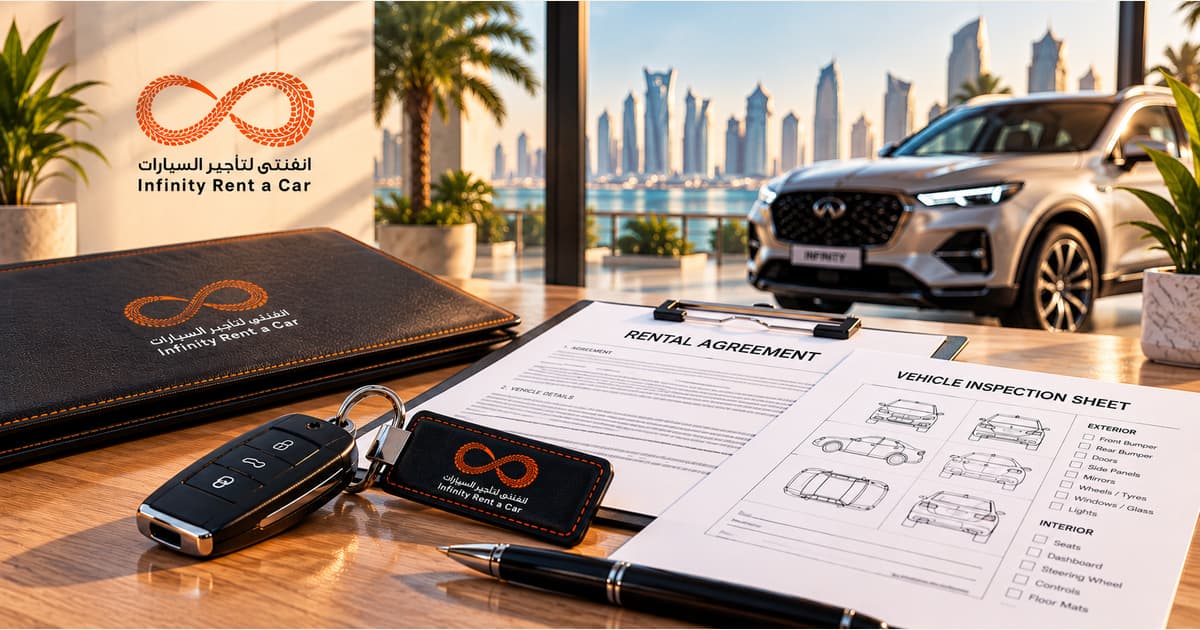
Photograph the car, wheels, windscreen and interior at handover. Make sure existing marks are recorded. A proper inspection protects both the customer and the rental company from later disagreement.
Choose protection based on risk, not only price
A customer using the car for a short city trip may have different priorities from a family renting an SUV for several weeks. Compare the price of extra protection with the potential excess and your comfort with risk.